
The psychology of colour in exhibition design
For me, colors are living beings, highly evolved individuals that integrate with us and with the whole world. Colors are the true inhabitants of space.
Yves Klein defined them as such, but the most accurate definition today is that color is a perception. However, it has been widely demonstrated that this perception is capable of influencing behavior and even 85% of purchasing decisions.
An interesting case is that of Barnett Newman, author of the painting Who's Afraid of Red, Yellow and Blue III. Exhibited in Amsterdam at the Stedelijk Museum, the painting caused a media stir when one of the viewers deliberately defaced the work, stating that he felt overwhelmed and that the painting provoked him because it was “so large, so red, so abstract”.
But how can a painting, a color, have such an effect on a person? This and many other questions will be answered in our dedicated article.
What is color psychology?
Science has studied the choice of colors in depth: the symbolism they conceal, their meanings, the effects they have on people. Numerous studies have been carried out on the subject, but there are just as many questions about how color actually affects people.
Colors strongly influence human perception and purchasing choices, even if only through their names: more creative and imaginative names, such as “mocha” rather than “brown”, are generally preferred.
The perception of colors is influenced by numerous factors, some conscious and others unconscious.
Conscious factors
Conscious factors are those we are aware of and can directly control. They are linked to rational decisions or personal and cultural experiences; these include:
Personal preferences: we are aware that we prefer certain colors over others;
Cultural influences: we know that certain colors have specific meanings in different cultures;
Context and functionality: we choose certain colors for practical or aesthetic reasons, such as wearing dark clothes for a formal occasion.
Unconscious factors
Unconscious factors, on the other hand, are those that influence our perception of colours without us realising it. They operate at a deeper level, linked to psychological, biological and emotional processes. Examples include:
Psychological associations: certain colors can evoke emotions or moods without us realising it;
Unconscious conditioning: past experiences, such as a happy childhood in a yellow room, can cause us to unconsciously associate that color with positive feelings in the future.
Biological factors: plants, for example, need to have very colorful petals in order to attract insects for pollination.
How color affects audience engagement
Color plays a particularly active role in staging, influencing emotions, perceptions and behaviour. How?
By creating the right atmosphere: the choice of shade can convey a certain atmosphere. Red or orange are perfect for interactive or commercial events, while blue or green can create a more relaxed atmosphere.
By directing attention: choosing to use a color in a specific part of the setting allows us to direct the audience's gaze to a certain point.
By creating emotional involvement: by exploiting the meaning of colors, we can influence the perception of the environment.
In fact, it is estimated that around 90% of a consumer's first impression of a product or brand is based on color. This should not come as too much of a surprise, given that it has always been used by food supermarkets, where we find colorful fruit and vegetable stalls prominently displayed at the entrance.
Set the right tone for your exhibition
Over the years, we have seen with our own eyes how color can influence and guide people's perceptions, how it can lead them to make certain decisions over others.
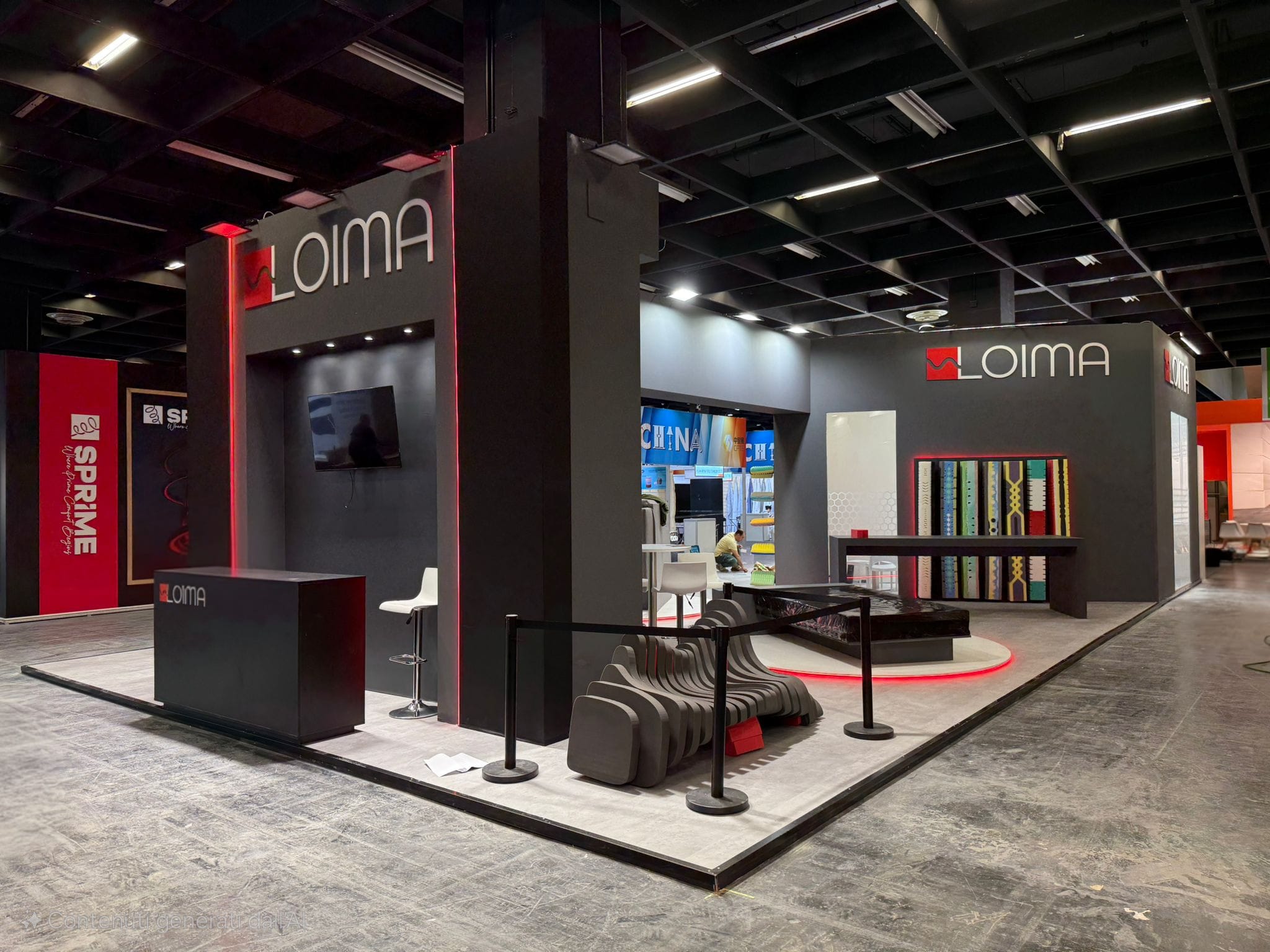
We apply this experience to our displays, helping our customers achieve their goals. We need to conduct an in-depth study of the company, understand the colors used in the brand logo and find the right harmony for the display based on the purpose for which it was created.
This is our design process: listening to the customer and putting our skills to work. Only in this way, together, can we win the game.